
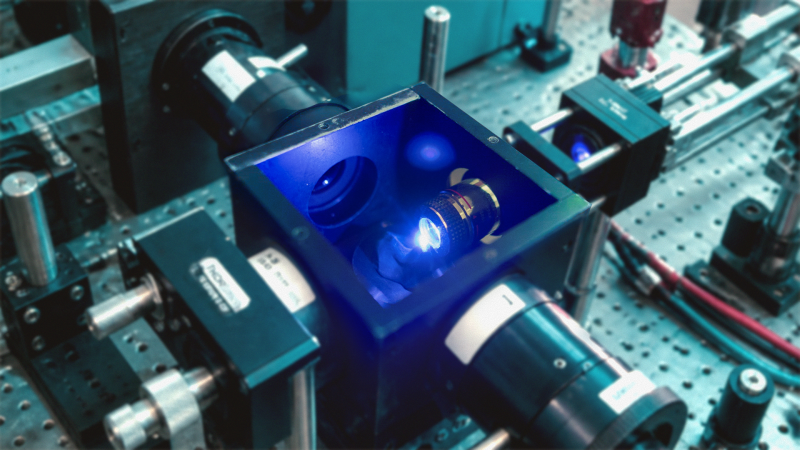

Frontiers in Science Deep Dive webinar
Lanthanide carriers: biomedical imaging redefined
21 October 2026
Discover how lanthanide carriers could support the next generation of biomedical imaging, from targeted MRI and deep-tissue optical imaging to low-dose X-ray detection.

Speakers
-
Prof Xiaogang Liu
National University of Singapore, Singapore
-
Dr Jorge Méndez-Ramos
University of La Laguna, Spain
-
Dr Yuxia Liu
The Chinese University of Hong Kong, Hong Kong

Materials engineered for targeted MRI, deep-tissue optical imaging, and low-dose X-ray detection
The authors of a Frontiers in Science lead article explored how engineered carriers—including nanoparticles, small-molecule chelators, and protein scaffolds—can tune the optical and magnetic properties of lanthanide ions for biomedical imaging.
In their lead article, the authors review recent advances across optical, X-ray, and magnetic resonance imaging. They show how lanthanide carriers can improve signal contrast, reduce background signals, limit photodamage and radiation exposure, and reveal subtle biological changes such as temperature, force, and hydration within living systems.
At this webinar, the expert panel discussed how these proof-of-concept advances could move toward clinical use. The session explored opportunities in multimodal imaging, theranostics, AI-guided probe design, stronger validation standards, and the remaining challenges around safety, scalability, regulation, and clinical translation.
Agenda
Introduction
Deep Dive and methodology
Next steps and looking to the future
Panel discussion and Q&A
Speaker and contributor bios
-
Prof Xiaogang Liu
Professor of Chemistry
National University of Singapore, SingaporeProf Xiaogang Liu has advanced the field of lanthanide luminescence over more than 18 years of research, developing optical nanomaterials that glow in visible colors when exposed to invisible near-infrared light. His work has produced molecular probes that offer a more selective and cost-effective way to track cancer cells than traditional biomarkers, safer X-ray imaging techniques that improve diagnostic and treatment guidance, and a prototype mouthguard using pressure-sensitive optical sensors that allows people with disabilities to operate computers, smartphones, or wheelchairs through simple biting actions.
He is Professor of Chemistry at the National University of Singapore, with joint appointments at the N.1 Institute for Health and the Institute of Materials Research and Engineering. He received the RSC Centenary Prize in 2024 and the President’s Science Award in 2016.
-
Dr Jorge Méndez-Ramos
Associate Professor of Applied Physics
University of La Laguna, SpainDr Jorge Méndez-Ramos is the coordinator of the Nanomaterials and Spectroscopy Research Group and chaired the SHIFT International Congress Series on spectral shaping for biomedical and energy applications from 2017 to 2022. His research centers on rare-earth-doped luminescent materials and spectral conversion processes such as upconversion, with applications spanning optical amplifiers, white-light generation, and silicon photovoltaic efficiency.
More recently, his work has extended into photochemistry, combining nanotechnology with photonic processes to address water purification and green hydrogen generation through artificial photosynthesis. He currently leads the MAGEC-REEsearch Project, studying rare-earth mining potential in the Canary Islands, funded by the Canary Islands Government and Spain’s Ministry of Economy.
-
Dr Yuxia Liu
Assistant Professor, Department of Biomedical Engineering
The Chinese University of Hong KongDr Yuxia Liu earned her BS in Biomedical Engineering from Xi’an Jiaotong University and her PhD from Tsinghua University, where her doctoral research examined the structural and mechanistic basis of TRPP calcium channel function.
Her work integrates molecular biophysics, ion channel engineering, and biomedical imaging to understand and control membrane protein function at the molecular scale, including contributions to TRPV1 water permeability, solvent-mediated analgesia, and high-performance protein-based MRI contrast agents. Her long-term research vision is to develop molecularly engineered biointerfaces for precise neuromodulation and non-invasive imaging.