


Frontiers in Science Deep Dive webinar
Breaking the memory wall: next-generation artificial intelligence hardware
12 February 2026 | 16:00-17:30 CET
Discover how next generation AI hardware—powered by brain inspired algorithms—can break the memory wall and enable faster, more efficient, and adaptable AI.

Speakers
-
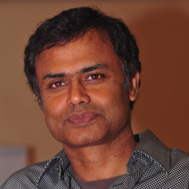
Prof Kaushik Roy
Purdue University, USA
-
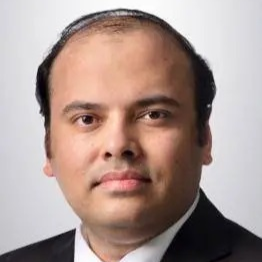
Prof Arijit Raychowdhury
Georgia Institute of Technology, USA
-
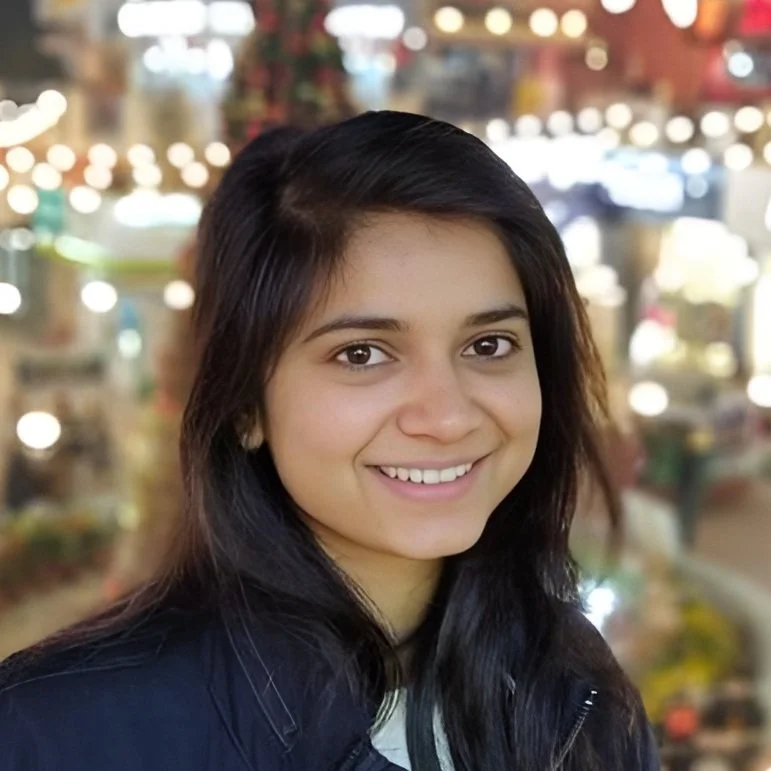
Tanvi Sharma
NVIDIA, USA
-
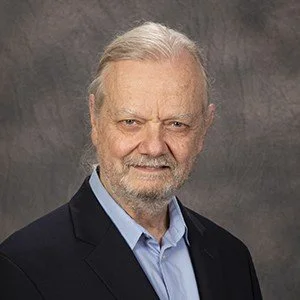
Prof R. Stanley Williams
Texas A&M University, USA

Brain-inspired computing paradigms to improve AI performance and sustainability
Hear from the authors of a Frontiers in Science lead article as they present a novel approach to AI hardware design—integrating neuromorphic systems processing capabilities and compute-in-memory (CIM) techniques—to overcome the limitations of modern computing hardware.
The article outlines a comprehensive roadmap for future AI-hardware research, emphasizing hardware–algorithm co-design to accelerate innovation across sectors such as healthcare, transportation, and robotics.
Join the authors and an expert panel to discuss emerging strategies—such as spiking neural networks (SNNs) and next generation AI chips—that could reduce data center energy use and enable real-time intelligence in compact, power-constrained systems. Potential applications include on-device medical diagnostics, autonomous vehicles, and drones that navigate safely.
Agenda
Introduction
Deep Dive and methodology
Next steps and looking to the future
Panel discussion and Q&A
Speaker and contributor bios
-
Kaushik Roy
Professor of Electrical and Computer Engineering
Purdue University, USAProf Kaushik Roy is the Edward G. Tiedemann, Jr., Distinguished Professor of Electrical and Computer Engineering at Purdue University. His research spans cognitive algorithms, circuits and architecture for energy-efficient neuromorphic computing and machine learning, and neuro-mimetic devices.
A pioneer in low-power very large scale integration (VLSI) and cognitive computing, he has supervised over 100 PhD graduates and co-authored two seminal books on low power complementary metal-oxide-semiconductor (CMOS) VLSI design. Kaushik has been recognized with numerous prestigious honors, including the Humboldt Research Award and the U.S. Department of Defense’s Vannevar Bush Faculty Fellowship, recognizing his visionary leadership and research excellence.
-
Arijit Raychowdhury
Chair, School of Electrical and Computer Engineering
Georgia Institute of Technology, USAProf Arijit Raychowdhury is a professor in the School of Electrical and Computer Engineering at the Georgia Institute of Technology, where he has been a faculty member since 2013. His research focuses on low-power digital and mixed-signal circuit design, power converters, sensor interfaces, and circuit–device interactions for emerging technologies.
Prior to academia, he spent six years in industry at Intel Corporation and Texas Instruments. Arijit holds over 25 U.S. and international patents and his work has been recognized with multiple honors, including the Intel Labs Technical Contribution Award and the Semiconductor Research Corporation’s Technical Excellence Award. Arijit is a senior member and distinguished lecturer of the Institute of Electrical and Electronics Engineers (IEEE).
-
R. Stanley Williams
Professor, Electrical & Computer Engineering
Texas A&M University, USAProf R. Stanley Williams holds the Hewlett Packard Enterprise Company Chair at Texas A&M University. A world-leading researcher in nanotechnology and computing, his scientific interests span nanoscale electronic, ionic and photonic devices, nonlinear dynamics and chaos, cognition, and computation.
R. Stanley is best known for pioneering the memristor and for foundational contributions to neuromorphic and analog computing. He currently leads the Energy Frontier Research Center “REMIND,” focused on uncovering the mechanisms to drive a new paradigm of brain-inspired computing. His achievements have been recognized with numerous honors, including the Feynman Prize in Nanotechnology and the Herman Bloch Medal for Industrial Research.